I am a recent graduate of the University of Florida. I am a small town girl who got a job working in the oil industry in West Africa. This blog is about my transition for college student to working adult plus my adventures.
I saw an article the other day that said that a recent study
showed over 60% of Americans no longer carry cash. I can’t say that is at all surprising. Back in the states, I hardly ever paid cash
for anything. I preferred to use my debt
or credit card. On the advice of my
father, I always had $20.00 in my wallet just in case.
The move to EQG, it was a little bit of a shock to be in an
almost entirely cash based economy. Other than the three large hotels and maybe
the airlines, nothing takes credit or debit cards. It has been interesting that I always have to
check how much cash I have before going out to make sure I have enough to cover
my expenses. As well as having to think
about the price to see if it is reasonable for what I want. This means having to convert from XCFA s to
dollars.
What is a XCFA of XAF? XCFA stands for Central African
Francs. XCFA is a common currency between
a decent percentage of the central African nations. The name is common but each countries prints their
own XCFA, so some countries using the XCFA doesn’t accept other countries
XCFA. I haven’t run into this yet but I
am sure I will someday. The exchange
rate for XCFA is fixed with the Euro such that 1 Euro = 655.957 XCFA. This makes the exchange rate with the dollar fluctuate
but currently its $1.00 = 481.138 XCFA.
Most of us expats just assume its 500 XCFA per dollar so it makes the conversion
easy.
Getting XCFA is easy, the hotel, banks and casino will gladly
take your dollars and give you XCFA, but the will not give dollars for
XCFA. This means it’s a balancing act
between how long I am going to be here and how much XCFA do I think I will need
during that time.
Even with the exchange rate, some things cost more, others cost less than in the States. Here are some common stuff and the XCFA and dollars.
Can of Coke Cola (at the hotel bar) - XAF 2,000.00 = $4.16
Bottle of Water (at the hotel) - XAF 1,800.00 = $3.74
Breakfast Buffet (at the hotel) - XAF 18,000.00 = $37.41
Club Sandwich and drink (at the hotel) - XAF 14,000.00 = $29.10
In order to go off shore, every Schlumberger (SLB) employee has to have a BOSIET or T-BOSIET course. BOSIET stands for Basic Offshore Safety Induction and Emergency Training. The T in T-BOSIET stands for Tropical. The courses are basically the same except the BOSIET teaches the use of survival suit whereas the T-BOSIET does not.
Since I will be working only 4 degree north of the Equator, I only had to take the T-BOSIET which is three days rather than five. BOSIET consist of five parts: Safety Induction, HEUT, Sea Survival, first aid, and firefighting. I was kind of looking forward to the course since I was told the closest facility to do the training was the Congo. I was rather disappointed to find out that a training facility had just opened in Malabo so I was going to get to do my training in town. My training class mix wasn’t surprising. I was the only female and the only expat in the class. I am not going to lie it was kind of intimidating for the first day but everyone was nice and friendly other than the monkey meat incident (One of them tried to convince me that the mystery meat for lunch was actually monkey. It wasn’t someone else later confirmed that I was correct and it was goat.) The most surprising part was that over half of them couldn’t swim so they would get to wear the fancy red helmets in the water.
The first day of the training course focused on the Safety Induction and Sea Survival. The Safety Induction was about four hours of oil rig basics which for me was good to know. It covered things like prescribed medication, illness, and personal protective equipment. The Sea Survival training was a about four hours: an hour of classroom and then three hours in the pool. This was to teach us what do should the need to board the lifeboats or are forced into the water arise.
The lifeboats used on oil rig are rather. The lifeboats are completely enclosed, fire resistant, come with a sprinkler system and motor. The boat holds about 50 people and once everyone is inside, the hatch is closed and the motor is turned on. The boat is then lower into the water and once released from the hooks the sprinkler system is turned on, to help keep it fire resistant should the ocean be on fire. Then the boat is steered away from the platform. We got to do the get in and lowering part as part of the course. The second part of this exercise involved being dumped into the water and how to conserve body heat, stay together, get into a life raft, and get lifted by the helicopter winch. In theory, one should never have to jump in into the water unless its a helicopter crash but history has shown that in cases of extreme emergency that may be the only option left.
The second day was on First Aid and firefight. First aid was a basic first aid knowledge course that mostly focused on being aware of other dangers if you find one passed out. These dangers include electricity, H2S gas, CO, and like 4 or 5 other types of gas that is odorless and can kill. The firefighting part was what I was most looking forward to. We got to play with fire extinguishers. Not just one but four different types for the different types of fires.
Water Fire Extinguisher to put out a Class A – Paper Fire
Foam Fire Extinguishers to put out a Class B – Gasoline Fire
Dry Powder Fire Extinguisher to put out a Class B – Gasoline Fire
CO2 Fire Extinguisher to put out a Class C – Liquefied Petroleum Gas
After that we learned how to use the self-rescue smoke hood and how to escape from a smoke filled room as an individual and as a team.
The third day was the scariest day of the course, HUET. I am a certified SCUBA diver with over 50 dives and love wreck and cavern diving and I will freely admit that I almost had a panic attack. HUET is all about what to do if the helicopter crashes. The day starts out simple enough with an hour classroom session then everyone gears up with coveralls, helmets, and life jackets. We started off with a swimming assessment to see if anyone’s helmet color needed to be switched and from there they made sure everyone could hold their breath at least 25 seconds as well as how to breath though a SCUBA regulator. I easily passed those two parts. Then came the hard part: the five pool exercises using the helicopter simulator.
The first simulator is easy. It assumes the helicopter landed on the water and the floats deployed correctly and one leaves the helicopter and enters directly into the life raft.
The second exercise is a practice without having to remove the window. You are strapped into the chopper and it starts to sink. You have to wait until the chopper is fully submerged before leaving to ensure that the rotor blades have stopped.
The third is the same as before but this time you have to remove the window. This is why being patience is the key. One needs to wait until the pressures equalize to help facilitate an easy escape. These exercises were easy for me and for the third one I was tapped on the shoulder to signal it was time to get out.
The fourth on is where it gets hard. You are strapped in, the push out windows have been removed. The helicopter sinks and then flips upside down. You first have wait for the chopper to sink and then flip upside down. This is rather scary. I can hold my breath for 40 seconds but when that adrenaline rush hits you it’s like nothing else and that 40 seconds becomes about 10. I managed to complete this exercise but when I surfaced, I was breathing hard, my heart was pounding and I was shaking. I then had about a min to calm down and get back in and do it again this time with the push out windows installed.
The last exercise was where I almost panicked. I wasn’t in the greatest spot right after the previous one but all I could think about during that last rotation was that I didn’t want to fail so I didn’t have to do it again. That was the only though that kept me in my seat and allowed me to get through it. After that run, I spent the next like 5 mins sitting by the pool and just letting my heart rate return to normal and the shaking to stop. I am so glad that as long as I am working in Tropical water I will not have to do that again until May 2018. We weren't allowed to take photos or video of the training but here is a min long video showing you exactly what the training entailed.
I got really behind in doing this blog. Between my trip to Europe, packing for my
move to Africa, and actually moving to Africa, this kind of fell to the way
side. I will starting going through some
of the process later.
But I have officially moved to Africa kind of. I am about five weeks into a two month visit
to Africa. As part of my job, I get to
attend several training schools over my first three years. My first training school that starts in about
3 weeks is in Abu Dhabi, UAE . Before
this I spent my first week of employment at a training course in Paris, France. On June 15, I will have been working just
over three months and have visited three countries on three different
continents.
“How are you enjoying Africa” is the most common question I
am asked here. I am still not sure but
my usual response is “Its interesting.”
I have been told by many people that Malabo isn’t your typical African
city, but then again this is the only place in Africa I have been too. I am living out of the Hilton Hotel on the
island since it was cheaper to have us stay there rather than get us a staff
house. So I have a maid who cleans my
room, three meals a day plus my laundry done for me. I am getting spoiled.
Although I have been here over a month, I still haven’t been
to a rig yet. They were just about done
drilling a well when I arrived and I need to get my Helicopter Underwater
Escape Training (HUET) training done. Once
I got my HUET, drilling has stopped and the one rig that has started drilling
again is at max persons on board. Still
on-shore for now but am hoping to get off-shore at the end of the month. Right now
my days are just spend doing my computer training and in the stop learning from
the techs.
I am going to end here for now but leave you with a sunset
picture.
Since every plan I made for post graduation was ruined by my international job offer, I had some free time and a apartment set-up fund that I no longer needed. I have spent several summers during college visiting national parks and exploring the USA. I am a firm believe that one should explore their own country before you should explore the world. I was doing that by visiting all the national parks (I have visited 27 of 59 parks). Needless to say I am not going to finish exploring the national park any time soon. So I decided that this was a perfect chance to go spend knock a few places off my must visit in Europe list. I am going to spend 17 days split between 3 great cities: München, Berlin, London.
So far I have completed the first stage of my journey, flying from Knoxville to Atlanta. In a few minutes, I am leaving Atlanta for the second stage of this trip Atlanta to Paris. Then from Paris to München.
Everyone has a wish list of place and things they would like to do. I have always had a couple places in Africa that I wanted to visit. Parts of Africa have always been on my list of places to visit. Now I am going to get the chance to do more than just take a two week vacation to Africa. I am going to be a short flight from some of the most amazing places, animals, and locations.
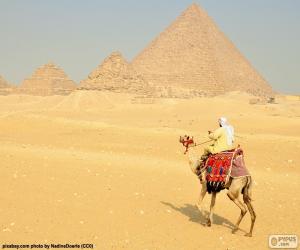
Egypt is perhaps the one place in the world I want to visit the most. I have been fascinated by Egyptian history. From the engineering marvels of the Great Pyramids to the fascinating treasures found in the Valley of the kings, all of parts of the Egyptian civilization are fascinating to me. I want to ride a camel out to the pyramids, visit the Museum of Egyptian Antiquities, tour the Valley of the Kings, and go SCUBA diving in the Mediterranean and Red Sea.
Victoria Falls is on the border of Zambia and Zimbabwe. It is believed that the famed explorer Dr. David Livingston was the first European to view the falls. The falls are said to be "the smoke that thunders" which is what Mosi-oa-Tunya means. Victoria Falls is the world largest water despite not being the tallest or widest, but it has the largest area of falling water.
Every year, a massive migration of over million zebra, wildebeest and other Serengeti species occurs in Kenya and Tanzania. This is the largest animal migration in the world. I want to see the wonder of this phenomenon and see this amazing site.
The only way to see gorilla in there natural habitat is to take a trek though the Africa forest to find a family group. I want to see both the Mountain and Lowland Gorillas. There are several places where Mountain Gorrilas can be found Democratic Republic of Congo (currently in the middle of a civil war), Rwanda, Ugnada. Lowland's can be found in Angola, Cameroon, Central Africa Republic, Equatorial Guinea, Gabon, Nigeria, Republic of Congo. A trip to mainland EG is in my future.
The Zambezi river is one of the best rivers in the world for whitewater rafting. Its a 15 mile section of river below Victoria Falls with 23 rapids. It is know for the technically difficult rapids, big drops, and massive holes.
Every year from May to July, million of sardines form shoals (that nasty little fish that comes in a can and you wonder who actually eats) that move north along the coast of South Africa. The sardine run is so large that it can be seen on satellites. This concentration of sardines attack large quantities of predators including sharks, dolphins, seals, and birds.
Mount Kilimanjaro, Tanzania is the tallest mountain in Africa and the tallest free-standing mountain in the world. Kilimanjaro is 19,341 feet tall and is part of the Seven Summits and Volcanic Seven Summit climbing challenges.
8. Cage Dive with a Great White Shark
Yes, I want to dive with the most feared predator of the sea, abet inside a cage. I might be crazy but I have seen Jaws and Shark Week. I can't wait to see this amazing creature.
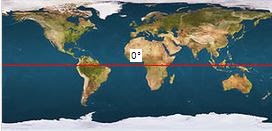
I am not exactly sure why I want to this, but I do know I want to. Since air travel became common few people cross the equator via ship, so I think it would be fun to get to.
I have to say job hunting is one of the hardest and most
discouraging things I have ever done. It always seemed like someone else was
always getting the positions I had applied for. Every semester, UF has a
huge career fair. Basically several hundred employers show up and you
wait 30 mins in line to talk to a recruiter for 30 seconds, and more than half
the time get told to apply online. This is really annoying because at the end
of the day talking to the recruiter does nothing. Thankfully,
Schlumberger did both online pre-selects and collected resumes for on-campus
interviews. During career fair, a lot of companies do information session and
basically they are a hour long show and tell about the company with free food.
No non-class related event happens without free food. Unfortunately, I
had class at the same time as Schlumberger's information session but I didn't
really need to learn about the company and what they did since I had done my
research well before career fair.
The on-campus interview was not nearly as
nerve racking as I thought it was going to be. It was some basic
interview questions on myself and my leadership in team situations. As
much as every engineering student hates those group projects, those same group
projects are a great way to show leadership and teamwork. The most memorable
question was about the most difficult team situation I had ever been in. I
After about a month of waiting, I got a
call for a second interview. The second interview was a week long camp
Schlumberger calls Focus in Engineering, Leadership, and Development Camp or
FIELD Camp for short. This was a week long interview/info session on
Schlumberger and the different divisions of Schlumberger.
As mentioned previously, FIELD camp is a week long program about
Schlumberger combined with a interview. For this program, I was flown out
to Houston, Texas along with 25 other college students from around the United
States and Canada. I was flowing from Gainesville, Florida to Houston Texas.
There was a slight mishap at the airport and we had to wait an hour for
pick-up. This was caused by a hour flight delay in Atlanta. I was
lucky that I wasn't they only UF person going to this camp flying out of
Gainesville. There was one other a third UF student attending but he was
flying out of south Florida.
Once at the hotel in Sugar Land, Texas, we
meet the other participants from many different colleges. The first night of
FIELD camp was the traditional get to know people games. I was lucky to
get my own room. Everyday was a 6:00 am wake-up and at the earliest 12:00
am end. Every day was a tour of one or two different division
of Schlumberger.
All the FIELD camp participants and the three recruiters with us on a boat ride though San Antonio.
It seemed like the entire week was
designed to try and scare us away from working for Schlumberger. They
didn't sugar coat the aspects of what a Field Engineer does for Schlumberger.
They stressed the hard work and long hours. They made it clear the
while Schlumberger pays well they make you earn every penny and working for
them isn't something one should take lightly.
We got to tour Schlumberger's
companies of Smith Bits and M-I SWACO. We also got to meet field engineers who
worked in wireline logging, drilling and measuring (D&M) and Pathfinder,
cementing, fracking, and several other Schlumberger divisions. We got to
then visit two actual working drill rigs. One site was doing D&M
while the other was fracking and wireline logging. I was really interested in
wireline logging and D&M.
Overall, the long hours, working hard, and
remote locations didn't scare me. This was my ideal job, not stuck in a office
and the chance to live in remote location far from huge cities.
After my week in Houston was over, I knew I wanted to work for
Schlumberger in either D&M and wireline logging when I graduated. My preferred
location from highest to lowest was Alaska, International (you don't get to
choose, just get to say international), or Southwest United States.
Where is Equatorial Guinea one might ask? I know my first thought was I was going to the south Pacific. Alas, I was thinking of Papua New Guinea. In fact there are five (or six if you count Guyana which is derived from Guinea) counties in the world with "Guinea" as part of their name, of which three are found in West Africa. So my confusion over where I was being sent was understandable. I am still excited about the job opportunity even if I was a little disappointed it wasn't Papua New Guinea.
Equatorial Guinea is the small country in red.
Truthfully, I had never heard of Equatorial Guinea (EG) before this job offer and realistically it would have never made my must visit list either. This small Africa nation is off the off beaten path. So my first visit after finding out that EG is in Africa is Wikipedia.
Flag of Equatorial Guinea
Equatorial Guinea's official name is the Republic of Equatorial Guinea. It is about 111,000 square miles which is about the size of Massachusetts and has population of 730k which is slightly larger than the city of Boston. EG gained its independence from Spain in 1968. So the national language is Spanish (just my luck, spent years avoiding learning Spanish and now being semi-fluent would be useful). Officially EG is a unitary semi-presidential republic. Basically this is a fancy way of saying that EG is controlled by a single entity who is "elected" by the people.
EG is made of a mainland
territory, Rio Muni, and five small islands located in the Gulf of Guinea.
Despite its name EG is not located on the equator, it lies almost
entirely above the equator. The exception
of this is a small island of Annobon which is located in the southern
hemisphere. I will be living and working on the largest of these islands,
Bioko. The capital of EG, Malabo, is
located on this island as well as most of the oil industry. EG has several ecoregions such a Atlantic
Equatorial costal forests, Central African mangroves, Cross-Sanaga-Bioko coastal
forests, Mount Cameroon and Bioko
montane forests, and Sao Tome, Principe, and Annobon moist lowland forests (I
will talk more about these regions in another post). Given EG’s tropical location it’s no surprise
that it has a tropical climate and only has two seasons, wet and dry. From June to August, Bioko is wet and Rio
Muni is dry and from December to February it is reversed. From September to November and from March to
May there is a gradual transition from on season to the next.